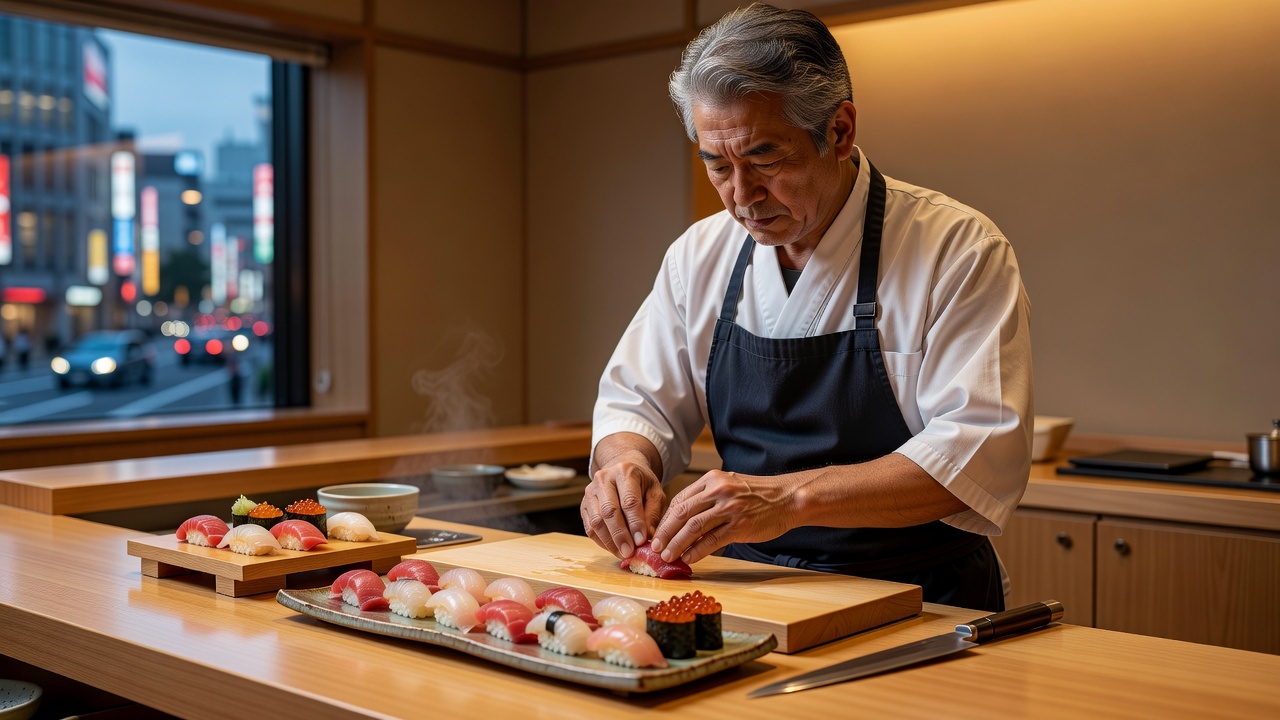
1. The Art of Omakase in Ginza & Roppongi
Tokyo contains more Michelin stars than Paris, a fact rooted in the relentless pursuit of single-dish mastery (Shokunin). When reserving an omakase experience in Ginza, dining transforms into a synchronized theatrical ritual between chef, seasoned Shari (rice), and seasonal ocean harvests.
Edomae sushi relies on precise aging and curing techniques. Wild bluefin tuna (Hon-maguro) is aged from 7 to 14 days to maximize umami concentration, while Kohada (gizzard shad) is flash-pickled in red vinegar to balance fat ratios.
Essential Recommendations: Omakase Dining
Top vetted locations for authentic Japanese sushi craftsmanship:
Avg Cost: ¥25,000 – ¥45,000 JPY
Etiquette: Eat within 10 seconds of placement.
2. Midnight Ramen Culture: Omoide Yokocho & Ginza Noodle Alleys
Beyond high-end dining, Tokyo's heart beats in its narrow Yokocho alleyways. Charcoal smoke fills the air in Omoide Yokocho (Memory Lane), while subterranean passageways below Tokyo Station house world-famous ramen craftsmanship.
Whether indulging in rich 18-hour simmered Tonkotsu pork broth or delicate Shoyu chicken dashi enhanced with niboshi (dried sardines), Tokyo's ramen ecosystem reflects hyper-regional micro-styles.
Pros & Cons of Tokyo Dining
- Unrivaled precision & quality control
- Immaculate hygiene across all price points
- Exceptional seasonal variety
- Strict reservation requirements for top spots
- Cash-only policies at legacy street stalls
- Limited seating capacity (often 6-10 seats)